- Analiz
- Piyasa Haberleri
- 30-year Treasury yield has crossed 5%
30-year Treasury yield has crossed 5%
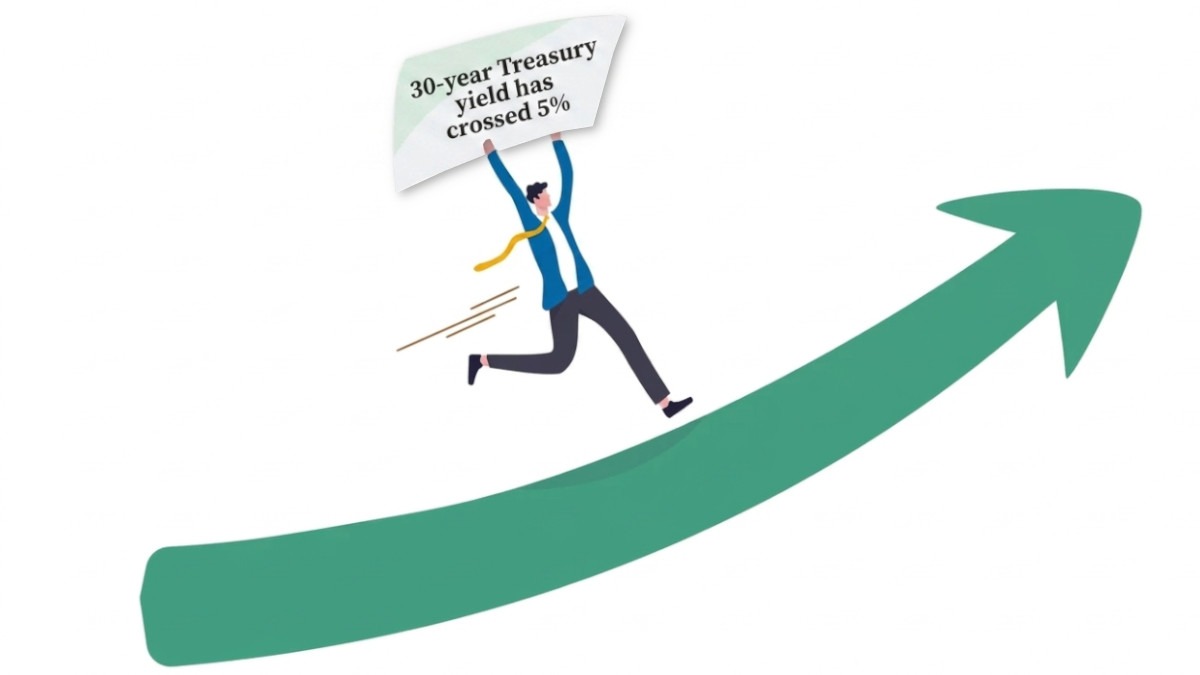
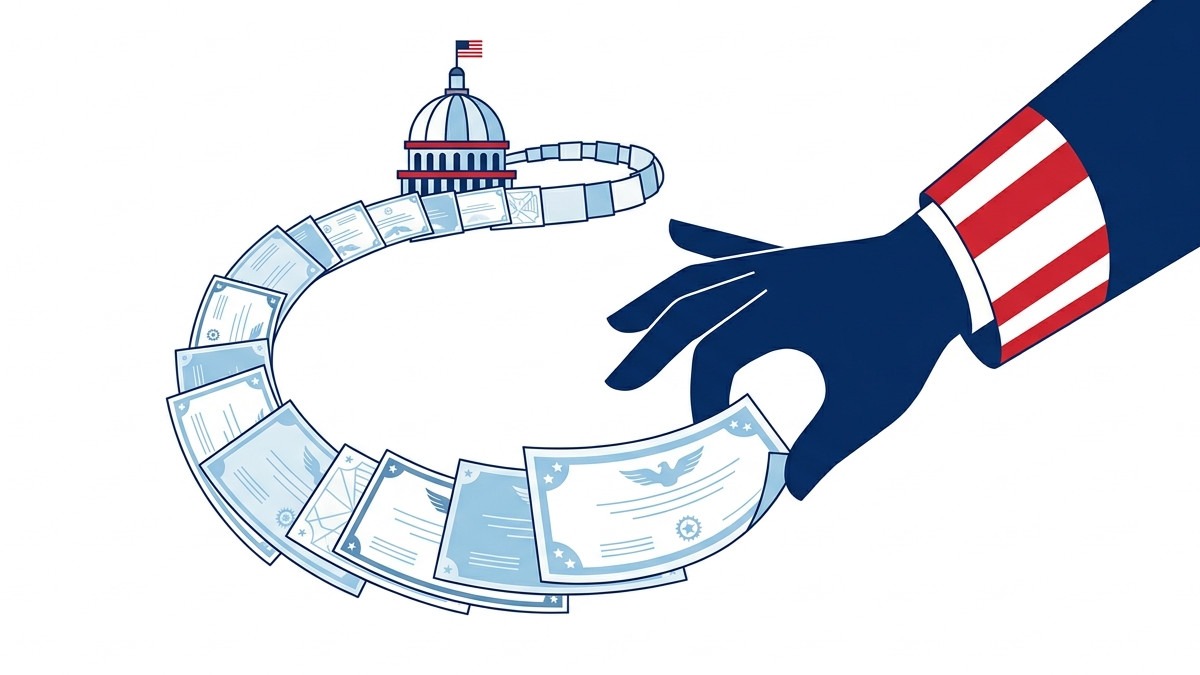
The 30-year Treasury yield has crossed 5% , let’s see who pays the price
- 5%
30Y yield breached - $39T
National debt - $1.2T
Annual interest bill
For months, investors and borrowers watched the 5% level on the 30-year U.S. Treasury bond. Last week 30-year yield hit 5%, while the 10-year hovered just below 4.50%.
The Fed has lost the wheel
Federal Reserve has been cutting interest rates, and the bond market simply doesn't care. The Fed slashed its benchmark rate from 5.25–5.50% to 3.50–3.75% over the past year. Long-term yields, barely moved. They've gone upward.
The only real emergency tool left is yield curve control. Fed buys unlimited quantities of long-term bonds to artificially cap yields. It is inflationary, exactly the opposite of what the U.S. needs when inflation is already running above the 2% target.
The government's $1.2 trillion headache
The U.S. national debt is $39 trillion, about 1.2 times annual GDP. Debt can be managed as long as the economy grows faster than it accumulates. The problem is the interest bill. In 2020, the government paid around $500 billion a year in interest, today it is paying over $1.2 trillion.
Every basis point rise in yields costs the government hundreds of millions in additional annual payments on new and refinanced debt. At 5–7% yields, either the government cuts spending on healthcare, education, and defense, or it accepts an ever-worsening debt spiral. Neither option is good.
Everyday Americans feel it too
When the 10-year yield rises, mortgage rates follow. Homeowners with variable rates see their monthly payments climb. Credit card rates, which are already averaging around 25%, get pushed even higher, spending power shrinks and at the margins, households start missing payments.
Good news is that 90-day mortgage delinquency rates remain below 1%, which means a repeat of the 2008 housing collapse is not in the immediate picture. Everywhere else stress levels are rapidly increasing.
Big Tech is not immune
Alphabet, Amazon, Meta, Microsoft have been spending at enormous scale on AI infrastructure and much of it is funded with debt. At 5% interest rates, that debt is expensive. At 7%, some of those investments stop making financial sense.
Alphabet and Amazon have the cash flows to absorb this. But f.e. Oracle is in a more unreliable position. Their debt has gone up and its free cash flow has turned negative. If yields rise further and AI investment returns disappoint, that is a bad combination. OpenAI with no profits whatsoever and hundreds of billions in debt obligations, faces similar path.
Three reasons yields may go higher still
Bloomberg Commodity Index already surpassed its 2022 peak and moves in lockstep with U.S. inflation. If the Strait of Hormuz disruption deepens, commodity prices rise, inflation rises with them, and bond yields follow.
Japan is the foreign holder of U.S. government debt, owning roughly 4% of all publicly traded Treasury bonds. To defend the yen, which has been weakening sharply as Japan's energy import costs climb, the Bank of Japan has been selling U.S. Treasuries. Every sale adds to the supply of bonds - pushing prices down and yields up.
Tech giants competing for bond investors. Alphabet, Amazon, and their peers now issue debt at levels close to the U.S. government with a 0.60% interest rate premium. For investors, that extra return is meaningful, so now tech corporate bonds are competing directly with U.S. Treasuries for the same pool of capital.
Bottom line
The 5% threshold on the 30-year bond is a signal that the era of cheap money is over. Sticky inflation, US-Iran war, Japan's retreat from U.S. debt are pushing yields higher. Unless spending is brought under control or inflation falls sharply, the pressure on yields will only intensify.
Yeni güçlü araç, Dolar Endeksi Technicals
Yeni güçlü araç, Dolar Endeksi Technicals
En popüler indikatörler ve osilatörler kullanılarak anlık tahminle canlı teknik analiz.
Şimdi Deneyin
If you don’t find a way to make money while you sleep, you will work until you die.- Warren Buffett