- Analiz
- Piyasa Haberleri
- Fight Behind Nvidia $20bn Groq Deal
Fight Behind Nvidia $20bn Groq Deal
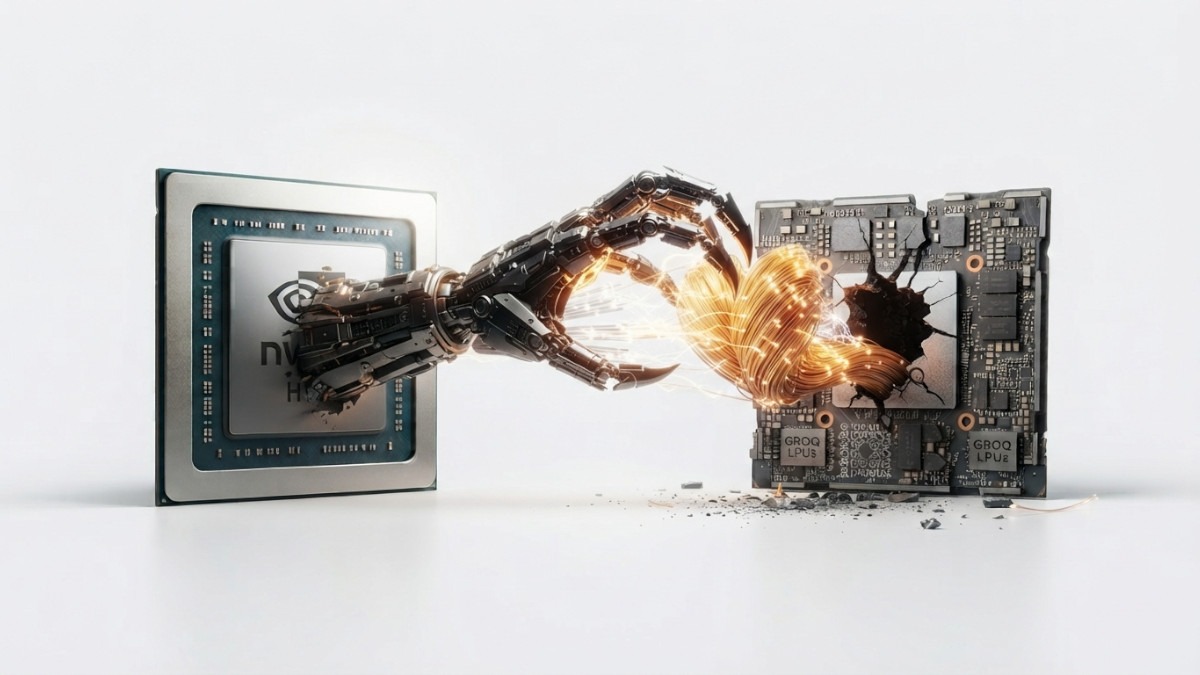
Nvidia's $20 billion deal with Groq was presented as a licensing agreement, but two former Groq engineers dispute that description and the way the deal was handled.
This has raised questions about how technology companies can acquire valuable technologies and talent without formally buying the company that owns them.
What happened to Groq shareholders
According to the lawsuit, Nvidia agreed to pay Groq $17 billion for licensing its technology, with an additional $3 billion reserved in Nvidia stock for certain Groq employees who transferred to Nvidia. Groq continued to operate as an independent company.
- On paper, that is very different from Nvidia buying Groq. In practice, the plaintiffs argue, it looked much more like an acquisition.
Nearly all of Groq’s engineers, as many as 200 people, moved to Nvidia. Groq founder and board member Jonathan Ross also joined Nvidia. At the same time, Nvidia obtained access to the technology that Groq had spent years developing.
So the plaintiffs' argument is crystal clear: If Nvidia actually received the company's most valuable assets and employees, why were ordinary shareholders treated as if they were simply selling shares in a company that remained independent?
Shareholders complaint
The lawsuit was filed by Benjamin Serebrin and Joshua Rubin, two former Groq engineers who owned shares in the company.
1. They argue that Groq's board failed to protect shareholders because of conflicts of interest among some of its directors and investors.
2.Their central claim is that the board should have looked for the best possible deal for all shareholders. Instead, they say, the structure of the transaction allowed Groq's senior executives and selected investors to receive benefits that were not available to other shareholders.
This distinction matters.
The $17 billion licensing payment was shared among Groq's investors. But the additional $3 billion Nvidia stock pool went to selected engineers who joined Nvidia.
That meant some people could effectively benefit twice: once through their ownership of Groq and again through compensation for joining Nvidia.
The plaintiffs argue that ordinary shareholders did not receive an equivalent opportunity to participate in the future value of Groq's technology.
Their complaint is particularly pointed, because Groq did not disappear. It continued operating and later raised money at a valuation of about $3.5 billion, while changing its business toward AI cloud computing.
That creates an obvious question: if the remaining company could later be valued at $3.5 billion, were the shareholders who were bought out fairly compensated?
The answer will depend on the facts and on how a Delaware court views the transaction. The lawsuit itself does not establish that the board acted unlawfully.
Was this really an acquisition?
This is likely to be the most important issue in the case.
Traditional acquisitions are relatively easy to identify. One company buys another, shareholders receive consideration, and the target becomes part of the buyer.
The Groq transaction was structured differently.
Nvidia did not formally buy Groq. Instead, it licensed Groq's technology and hired much of its workforce. Groq remained a separate business.
That structure can have legitimate business reasons. A company may want specific technology or employees without wanting to take on the target's entire business, liabilities and operations.
But it also creates a potential problem.
If a company can obtain the technology, intellectual property and employees that make another company valuable while leaving the legal shell behind, it may be able to achieve many of the economic benefits of an acquisition without going through the same regulatory and shareholder process.
That is why the term "acqui-hire" has become important in the technology industry.
- The basic idea is simple: instead of buying the company, a larger technology company hires its key people and obtains access to important technology through separate agreements.
For the buyer, this can be attractive. It can be faster and potentially easier from a regulatory perspective.
For shareholders of the smaller company, however, it can create a difficult situation. The value of a start-up often sits largely in its employees, technology and intellectual property. If those assets leave, the shareholders can be left owning a company that is worth much less than it was before.
That is essentially what the Groq plaintiffs say happened.
The Nvidia stock payment is particularly important
The $3 billion Nvidia stock pool could become one of the most closely examined parts of the case.
The lawsuit claims that selected Groq employees were effectively given a separate economic benefit for moving to Nvidia.
That creates a tension between two roles.
Employees can be compensated for joining a new company. There is nothing unusual about that. But when those employees are also shareholders, executives or directors of the company that is transferring valuable assets, the lines become less clear.
A shareholder could ask: were these payments primarily compensation for future work at Nvidia, or were they another form of consideration for Groq's technology and business?
- If the payments were genuinely for future employment, Nvidia has a strong reason to treat them separately from the purchase price.
- If they were effectively part of the price for acquiring Groq's technology and workforce, the plaintiffs could argue that those benefits should have been considered when determining whether Groq's other shareholders received a fair deal.
Groq's later valuation makes the dispute more complicated
Another important fact is what happened after the Nvidia transaction.
Nvidia later participated in a financing round that valued the remaining Groq at approximately $3.5 billion.
That does not automatically prove that the original shareholders were underpaid. A company's value can change dramatically after a major transaction, and the remaining Groq was also pursuing a different business strategy.
But it gives the plaintiffs something concrete to point to.
They can argue that the company retained meaningful value after Nvidia took its chip technology and engineers. They also argue that the original shareholders lost the chance to benefit from future developments in Groq's technology and from possible synergies with Nvidia. That argument is especially significant because Nvidia has since introduced a chip based on Groq's technology.
In other words, the technology that was licensed was not merely an asset that Nvidia acquired and forgot about. It became part of Nvidia's own product development.
That could make the question of what the technology was worth at the time of the deal even more important.
The tax issue
The structure of the deal also had tax consequences.
Because Nvidia licensed the technology rather than acquiring Groq outright, the $17 billion payment was treated as taxable income for Groq.
The plaintiffs argue that this further reduced the value available to shareholders.
Two deals can have the same headline value but produce very different results depending on how they are legally structured, how much goes to shareholders, how much goes to employees and executives, and what taxes are triggered.
The question is how much economic value reached each group involved in the transaction.
The board's conflicts could be critical
The plaintiffs allege that four investment funds connected to Groq — BlackRock, Social Capital, Infinitum and Disruptive — had conflicts because of their interests in both the transaction and the company that remained afterward.
They argue that these investors benefited from the structure of the deal while ordinary shareholders were left with less.
The funds are not defendants in the lawsuit, and the allegations have not been proven.
If a court concludes that Groq's board was conflicted and failed to run a proper process, the deal could face much closer scrutiny.
That may ultimately matter more than whether the transaction was formally called a licensing agreement.
Consequences beyond Groq
The technology industry is increasingly using transactions that sit somewhere between an acquisition and ordinary hiring.
For large technology companies, these arrangements can be an efficient way to obtain expertise without purchasing an entire business. That can be attractive in artificial intelligence, where a small group of engineers can be more valuable than a company's traditional assets. But the same structure can create problems for investors.
- Imagine a start-up worth billions largely because of its technology and employees. A large company takes the employees and licenses the technology. The start-up remains independent, but its most important assets have effectively moved elsewhere.
The shareholders still own the company, but the economic engine that made their shares valuable may have left.
That is the problem the Groq lawsuit is asking Delaware courts to address.
And the plaintiffs openly acknowledge that there is no clear Delaware precedent directly answering the question. That makes the case important even if the plaintiffs ultimately lose.
The real test for the deal
The biggest question is whether the structure of the transaction allowed Nvidia to capture most of Groq's economic value while allowing the company to describe the arrangement as something less than an acquisition.
If the court accepts the plaintiffs' view, the case could establish that companies cannot simply separate technology transfers, employee hiring and financial arrangements when those transactions collectively amount to a change of control.
If Nvidia and Groq prevail, companies may have more freedom to use similar structures in the future.
Either way, the case could influence how Silicon Valley deals with start-ups whose main assets are their people and intellectual property.
For Nvidia, the stakes go beyond the $20 billion Groq transaction. The company has become one of the most powerful players in the AI industry, and its access to new technologies and engineering teams is strategically important.
For start-up shareholders, the case raises an equally important question: when a large technology company takes almost everything that makes a start-up valuable, what exactly does it mean for the start-up to remain independent?
That question is to become more important when AI companies will start to compete to buy the people and technology instead of businesses.
Yeni güçlü araç, Nvidia Technicals
Yeni güçlü araç, Nvidia Technicals
En popüler indikatörler ve osilatörler kullanılarak anlık tahminle canlı teknik analiz.
Şimdi Deneyin

If you don’t find a way to make money while you sleep, you will work until you die.- Warren Buffett